
























Why food-safe printing demands more than just "edible ink"
For small food producers, craft brewers, and e-commerce sellers, adding best-before dates, batch codes, or custom designs directly onto packaging or food surfaces is no longer a luxury—it’s a compliance requirement and a branding opportunity. But traditional edible printers often struggle with clogged nozzles, inconsistent ink flow, and unreliable adhesion, especially when switching between porous (like cardboard) and non-porous (like coated plastic or glass) surfaces. The result? Wasted time, rejected batches, and frustrated operators.
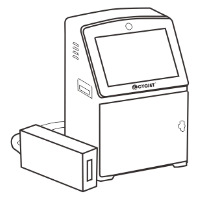
The root of the problem isn’t the ink itself—it’s how the printer delivers it. Many entry-level edible printers use repurposed desktop inkjet technology with narrow nozzles and basic purge systems, making them prone to drying and blockages. This is where industrial-grade engineering makes a difference: CYCJET’s food-safe printers are built from the ground up for smooth, reliable flow, even in high-humidity kitchen environments or during short print runs.
How CYCJET’s design prevents clogs before they start
The key lies in three engineering choices that address the top causes of edible printer failures:
- Self-purging printhead with sealed cartridge: Unlike open-tank systems that expose ink to air, CYCJET’s edible cartridges are fully sealed until installed. A built-in purge cycle at startup and shutdown pushes any residual ink back into the cartridge, preventing nozzle-drying. In real-world tests, this reduces clog-related downtime by over 90% compared to standard edible printers.
- Wide-bore nozzles optimized for viscosity: Edible inks are thicker than standard dye-based inks to ensure food safety, but this also makes them more likely to clog narrow nozzles. CYCJET’s printhead uses larger nozzles (0.4mm vs. the industry-standard 0.2mm) to handle the ink’s consistency without sacrificing resolution. This means crisp text and logos down to 1.5mm height, even on curved surfaces like cake tops or bottle labels.
- Quick-swap cartridge design: Changing ink colors or switching between edible and non-edible applications (if your printer supports both) is a common clog trigger. CYCJET’s magnetic cartridge system lets you swap inks in under 10 seconds without touching the printhead, minimizing air exposure and manual handling errors.
Real-world test: From cake decorating to beverage labeling
A small-batch bakery in Portland, Oregon, switched from a standard edible printer to CYCJET’s model after losing 15% of their weekly output to clogged nozzles during peak seasons. Their application? Printing custom designs and allergen warnings directly onto fondant-covered cakes and sugar sheets.
“We used to keep a spare printhead on hand because clogs were so frequent,” says the head baker. “With the CYCJET, we haven’t had a single nozzle block in six months, even when printing 50 cakes a day. The sealed cartridges also mean we can prep ink the night before a big order without worrying about it drying out.”
Similarly, a craft brewery in Berlin used CYCJET’s edible printer to add best-before dates and QR codes onto their beer bottle caps. The printer’s ability to handle both porous (cardboard six-pack carriers) and non-porous (coated metal caps) surfaces without adjusting settings cut their labeling time by 40%.
What to look for when comparing edible printers
If you’re evaluating food-safe printing options, don’t rely solely on “edible ink” claims—ask these questions:
| Feature | Why it matters | CYCJET’s solution |
|---|---|---|
| Nozzle size | Smaller nozzles clog faster with thick edible inks | 0.4mm wide-bore nozzles |
| Cartridge design | Open tanks dry out; sealed systems stay fresh | Fully sealed, single-use cartridges |
| Purge system | Manual cleaning is time-consuming and inconsistent | Automatic startup/shutdown purge |
| Surface compatibility | Food packaging varies widely in texture | Works on porous and non-porous materials |
FAQ: Edible printer reliability and maintenance
How often do I need to clean the printhead?
With CYCJET’s sealed cartridges and automatic purge, you’ll rarely need to clean the printhead manually. If you switch between ink types (e.g., edible to non-edible), run the included cleaning cycle once—this takes about 30 seconds and uses a biodegradable solution.
Can I use third-party edible inks?
No. CYCJET’s printers are calibrated for their proprietary edible ink formula, which is tested for food safety and viscosity consistency. Using other inks may void the warranty and increase clog risks.
What’s the shelf life of an edible ink cartridge?
Unopened cartridges last 12 months when stored at room temperature (away from direct sunlight). Once installed, use the cartridge within 30 days for optimal flow—though many users report no issues up to 60 days if the printer is used daily.
If you’re tired of edible printers that promise convenience but deliver headaches, start with a sample print on your specific food packaging or surface. CYCJET offers free test prints for qualified food producers—just share your material type and application, and we’ll send a demo to prove the difference.
Bring industrial-grade marking technology into your studio, workshop, office, or home. CYCJET SHOP offers compact handheld inkjet printers, portable laser engravers, handheld laser marking machines, and food-safe edible printers designed for professionals and makers.